
Gravel Calculator
Estimate how much gravel you need in cubic yards or cubic metres for one or more rectangular areas, with an optional density-aware result in short tons or metric tonnes.
Start calculatingGravel calculator highlights
- Transparent MathBuilt on visible volume formulas.
- CustomizableEditable waste % and bulk density.
- Multiple AreasAdd unlimited rectangular sections.
- Instant ResultsLive volume & weight conversion.
How to measure a gravel project
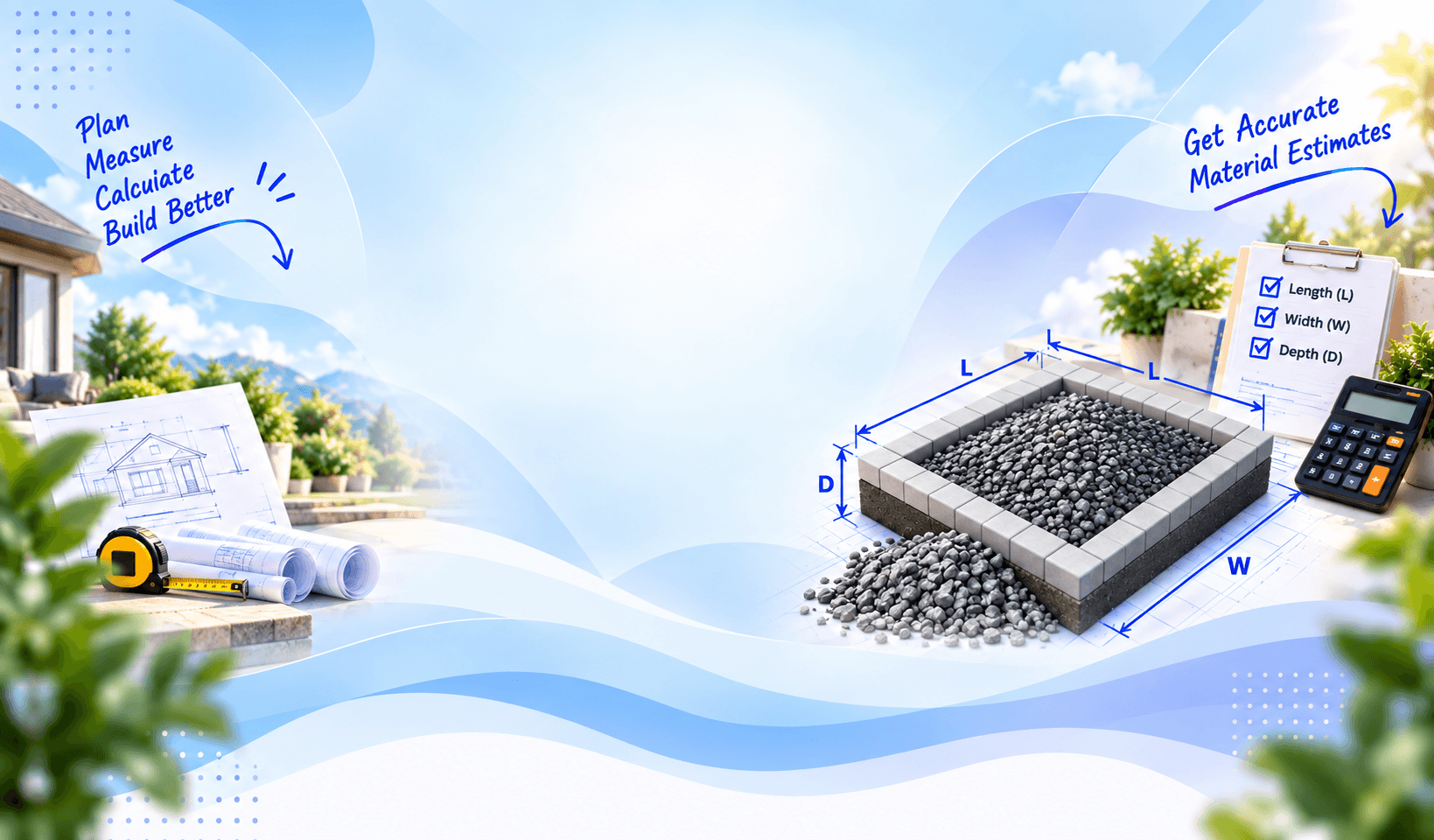
Measure length and width for each rectangular section in feet or metres, then choose the planned compacted depth. Add multiple rectangular areas if your project has sections with different shapes or depths.
Read the complete measuring guideGravel calculation guidelines
How much gravel do I need?
Measure each area's length and width, then choose a representative compacted depth. Add separate areas when the dimensions differ.
Why weight is an estimate
Bulk density changes with rock type, gradation, moisture, voids, and compaction. Weight appears only after you choose a documented source reference or enter a custom positive density.
Multiple project areas
Add driveways, patios, and paths as separate areas. Totals combine volume and estimated weight for all areas.
Formula
Volume = length × width × depth
Order volume = total raw volume × (1 + waste % ÷ 100)
Worked example: Driveway & Patio Base
A 12 ft × 12 ft gravel pad excavated to 3 in deep (0.25 ft) has a net volume of 36 ft³ (1.3333 yd³). With a recommended 10% compaction & spreading allowance, the total order volume is 1.4667 yd³.
Length
12 ft
3.66 mWidth
12 ft
3.66 mDepth
3 in
0.25 ft / 7.6 cmOrder Volume
1.4667 yd³
+10% bufferHow 1.4667 yd³ translates into standard gravel supplier units:
Estimated Weight
at 2,800 lb/yd³ (crushed rock)
Standard 50 lb Bags
Retail bagged stone
Metric Volume
Standard cubic meters
Before ordering gravel
The gravel estimator first calculates volume from length, width, and depth. Use cubic yards or cubic metres when buying by volume; when a supplier quotes by weight, the density-aware conversion provides the corresponding short-ton or metric-tonne estimate.
- Confirm the measured area and compacted depth.
- Ask whether the supplier sells by volume, short ton, or metric tonne.
- Use a density for the actual gravel product, moisture, and compaction state.
- Choose a project-specific allowance for compaction, spillage, and irregular edges.
For construction and maintenance context, see the FHWA Gravel Roads Construction and Maintenance Guide. Verify the final quantity and delivery constraints with your supplier.
HELP & GUIDELINES
Gravel calculator questions
Why trust this calculator
- No signup requiredUse every calculator instantly.
- Private by defaultYour inputs stay on your device.
- Checked formulasReviewed methods and test cases.
- Visible review dateSee when this page was last checked.